 |
Just after midnight tonight, Ontario lawyer Paul McKeever will release Part 1 of "The Principle of Pot", his new two-part documentary about the nature and motives of Marc Emery, the media-dubbed Prince of Pot. Part 1 runs 1 hour and 39 minutes and will be made available as a playlist on YouTube.com. Part 2 will be released at a later date.
The launch is timed to precede a decision by Canada's federal justice minister, Rob Nicholson, about whether or not to approve the extradition of Emery to the United States, where he faces years of imprisonment for having sold cannabis seeds, in Vancouver, Canada, via mail order. The Minister's decision is expected within the next 81 days.
Emery's opponents, and the U.S. authorities who demanded his arrest in Halifax, have attempted to portray Emery as a profit-motivated drug dealer. Part 1 of McKeever's documentary will cover the period up to 1990; a period during which Emery was equally active as an advocate of individual freedom, but whose advocacy of individual freedom did not include campaigns concerning the issue of cannabis prohibition.
Being the result of countless hours of research, interviews, writing and editing, the video includes audio, video and textual information that has never been seen in any profile of Emery. Much of the audio and video having been drawn from the archives of Freedom Party of Ontario (with which Emery was active until 1990), it has never before been seen by the general public or media.
What: "The Principle of Pot" (Part 1) - divided into four segments (a playlist will be available)
When: approximately 12:01 AM (EST), Monday, January 18, 2010 (i.e., just after midnight on Sunday)
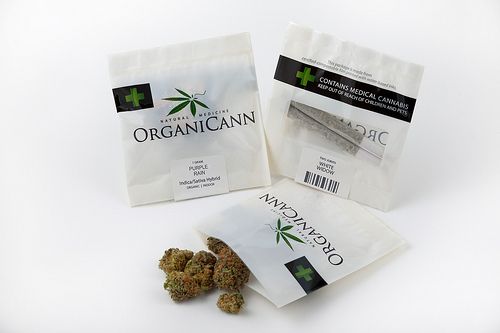
Today, The Organic cannabis Foundation, LLC (OrganiCann), the largest medical cannabis dispensing collective in Northern California, announced exciting new home compostable packaging.
OrganiCann's new packaging is made from certified-compostable film printed with water-based inks. The compostable film is made from sustainably produced wood. OrganiCann's packaging safely biodegrades in home or commercial compost. It will even biodegrade in a wastewater environment.
"At OrganiCann, we are committed to sustainability in everything we do," said Dona Ruth Frank, Managing Member of OrganiCann. "Whether it is how our medicine is cultivated, or how it is packaged -- we are continuously developing more environmentally friendly solutions."
Thanks Toije!
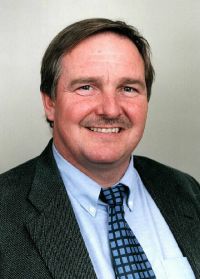 |
David Nutt, the scientist sacked as a government adviser by the home secretary, today defiantly launched his own independent committee which he says will provide the definitive scientific verdict on the risks of drugs.
Nutt said his committee was willing to give advice to the government's Advisory Council on the Misuse of Drugs (ACMD), from which he was sacked as chair.
He was dismissed from the post after criticising politicians for distorting research evidence and claiming alcohol and tobacco were more harmful than some illegal drugs, including LSD, ecstasy and cannabis.
The new committee -- called the Independent Scientific Committee on Drugs (ISCD) -- includes a number of big names in the field and has the potential to embarrass the government, due to its determination to make public the evidence on the relative risks and harms of drugs without regard to political sensitivities.
Nutt portrayed the ACMD as something of a lame duck scientifically, following the resignations of five of its members in sympathy with him -- four of whom have joined the ISCD. "It is a body made up of drug treatment people, police and magistrates," he said.
Thanks to Mr. Tumnus!
NASA is investigating how a bag of cocaine got into the hangar that houses space shuttle Discovery at the Kennedy Space Center in Florida.
NASA spokesman Allard Beutel said Thursday that the bag contained a tiny amount of the illegal substance. It was found by a worker in a secure part of the hangar that is accessible by about 200 NASA employees and contractors.
NASA is drug testing and interviewing workers, as well as using drug-sniffing dogs.
Beutel says there is no problem with any of Discovery's hardware, nor is there any indication that any employees were under the influence while working in the facility.
Discovery is being prepared for a mission in March.
Just a few months after the public became aware of the legal sale of synthetic marijuana in Kansas, state lawmakers have a plan to snuff it out.
Rep. Rob Olson, an Olathe Republican, has legislation that would outlaw synthetic cannabinoids like K2, which are designed to mimic the chemical - but not legal - effects of marijuana.
"This is fast becoming the new drug of choice in the schools," Olson said.
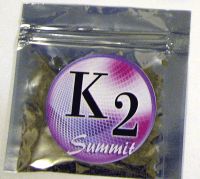
Available for sale online and at a store in Lawrence, K2 comes in a small pouch for $15 to $30. It's a mix of dried herbs that look like oregano but is laced with chemicals designed to act on the brain like Mary Jane. There are other similar brands as well.
Johnson County police first discovered the drug was being used by ex-convicts on probation. They turned to K2 hoping it wouldn't show up on drug tests as marijuana. Now police say they're finding it in high schools.
Thanks h!
When the Mexican military opened its Museum of Drugs in 1985, there were only a couple of dusty display cases in a small cramped room...
How the situation has changed. The museum is now housed in spacious suites at Mexico's version of the Pentagon, but its curators say they are running out of room for all the contraband they would like to showcase.
The legacy of President Felipe Calderon will be, for better or worse, his confrontation with the drug mafias, which continue to shock and amaze with their brutality and brazenness. On Saturday, Mexicans opened their morning newspapers to read that cartel assassins in the state of Sinaloa had peeled the face off their victim and sewn the skin onto a soccer ball.
The museum is open to Mexican officials, visiting diplomats and graduating army cadets, who tour the exhibits to learn about their only real enemy, the drug cartels. Occasionally the brass lets a journalist have a look, but the greater public is not permitted.
Washington State is approaching the legalization of marijuana on two fronts this year. There are ballot initiatives in the works, but there are also measures going on within the government. Danny Westneat, of the Seattle Times, points to legislative progress in an article entitle, "Time to let pot trade bud legally".
Today, former Seattle Police Chief Norm Stamper, also of LEAP, will ask state legislators to legalize marijuana. Doing so would cut down on violent crime, as well as save millions of dollars, he'll argue. He'll be joined by a former Border Patrol agent.
One proposed bill, House Bill 1177, would reduce adult possession of pot from a crime to a civil infraction with a $100 fine (it would stay a crime for juveniles.) That would save an estimated $12 million a year in jail and court costs.
The other bill, House Bill 2401, would legalize pot completely (for adults.) Then regulate the sale -- with government control of type, price and potency -- much as we do with alcohol.
 |
Could it be that stoners are mismanaging a successful business enterprise? I seem to remember similar turf wars in the psychedelic community many years back...
Co-produced by Todd McCormick and Brian Roberts, last June’s THC Expo at the Los Angeles Convention Center was a watershed event for cannabis commerce. Now the partners are openly fighting, the 2nd Annual THC Expo scheduled for April has been cancelled and Roberts is already promoting an event called THC Expose.
On Jan. 7, THCexpo tweeted: THE 2010 THC EXPO HAS BEEN CANCELED.”
THC Expo 2010Today, CelebStoner received the following tweet presumably from Roberts: THC EXPO IS NOT CLOSED DOWN. WE ARE ON AND WE ARE BIGGER THAN EVER. WE HAVE MORE COMPANIES THIS YEAR THAN LAST YEAR. THCEXPOSE IS STILL GOING ON IN APRIL AS PLANNED. JUST A LITTLE HIGH JACKING OF MY SITE BY TODD.
We emailed McCormick to find out what’s going on. He sent a personal reply, then edited that and sent the following letter to his website registrants:
Hello HEMPIRE Members!
I am writing you today to inform the community that I had to dissolve my partnership with Brian Roberts because as our bookkeeper I discovered that he had not paid people that worked for us six months ago. He misallocated our funds and paid for his personal properties without my consent.
Okay then. Via Shroomery News Service
 |
Prospective case–control study of forensic autopsies was carried out in the time interval November 2003 to June 2006 at the Institute of Legal Medicine, Seville, south-west Spain, with a reference population of 1 875 462 inhabitants. Toxicology included blood ethanol analysis and blood and urine investigation for drugs of abuse and medical drugs. Autopsy was performed according to the European standardized protocol. Ten age- and sex-matched patients who died of violent causes with no antecedents of COC consumption and negative toxicology served as controls. During the study period, 2477 forensic autopsies were performed, including 1114 natural deaths. Among the latter, 668 fulfilled the criteria of SD and 21 (all males, mean age 34.6 + 7.3 years) resulted to be COC-related (3.1%). Cocaine was detected in 67.1% of the blood (median 0.17 mg/L, interquartile range 0.08–0.42) and in 83.0% of the urine samples (median 1.15 mg/L, interquartile range 0.37–17.34). A concomitant use of ethanol was found in 76.0% and cigarette smoking in 81.0%. Causes of SD were cardiovascular in 62.0%, cerebrovascular in 14.0%, excited delirium in 14.0%, respiratory and metabolic in 5.0% each. Left ventricular hypertrophy was observed in 57.0%, small vessels disease in 42.9%, severe atherosclerotic coronary artery disease in 28.6%, and coronary thrombosis in 14.3%.
San Francisco voters may get a chance to weigh in on whether the city should tax and regulate the growing and selling of marijuana. Supervisor Ross Mirkarimi on Tuesday proposed a June ballot measure that would make it official city policy to "license, regulate and tax the cultivation and sale of cannabis" - whether for medicinal or recreational use.
"It's time that we have a regulating system in place," said Mirkarimi, who still must secure Board of Supervisors' support to put his proposal to voters. Regulations, he said, could address such issues as where the pot could be grown, in what quantities and what safeguards are needed to limit the risk of fire.
Mirkarimi said that on the question of taxation, San Francisco could not move forward without state authorization. California voters may take up that issue in November. However, Mirkarimi said he believes the city can unilaterally tackle the matter of cultivation.
|

Recently @ DoseNation
|
|