 |
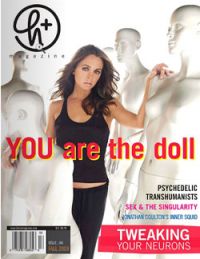
h+ Magazine asked me to do an interview with David Pearce, founder of the Better Living Through Chemistry (BLTC) society and author of the transhumanist manifesto "The Hedonistic Imperative". He is also an ardent advocate for ending suffering by altering our outdated genomes to provide only sympathetic gradations of bliss for all living things. We had a very long discussion which will be available sometime in the future, but the edited highlights can be found in the Fall 2009 issue of h+.
h+: You use MDMA consciousness as a benchmark for bliss and empathy. But like alcohol intoxication, I’ve seen people on MDMA being very dismissive to people with real problems while thinking they were being empathetic and compassionate. Couldn’t being too happy in the face of real problems be considered a form of shallowness or self-delusion?
DP: Taking MDMA (Ecstasy) may be little better than glue-sniffing compared to mental health in an era of mature postgenomic medicine. But "empathogens" like MDMA are a reminder that not all euphoriants promote selfish behavior. Ethically, it’s (presumably) preferable to seek heightened empathy and sometimes fail rather than not bother to empathize at all. MDMA-induced intensity of emotional release also stands in contrast to the shallowness induced by "psychic anaesthetizers" like the ill-named SSRI antidepressants.
Alas, you’re right to point out how the rose-colored spectacles of Ecstasy users don’t guarantee acuity of insight or accuracy of social perception. The "penicillin of the soul" is no magic bullet. Getting "loved up" is good for communing with other loved up users, but it’s not a recipe for solving the deeper problems of non-users... or life on Monday morning. Even when safe and sustainable empathogens can be developed, pure compassion won't cure cancer, solve the AIDS crisis or reverse the ravages of aging. Such complex, multi-faceted medical problems need rigorous scientific research. To say this isn’t to devalue the "magic" of MDMA. In a better world, the rose-colored spectacles induced by MDMA-like states may be as socially perceptive as the most hard-edged "depressive realism" of contemporary cynics. In the meantime, Darwinian consciousness is prudent for a Darwinian world.
h+ Magazine, Fall 2009, pages 58-62. You can download the digital version now or wait until the end of the month and find a hardcopy on stands.
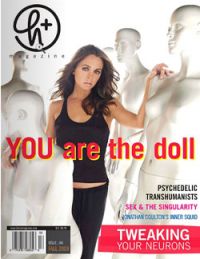 |
I wrote a column entitled "The Perils of FDS: Fun Deficiency Syndrome" for the Fall 2009 issue of h+ Magazine, which is a first stab at establishing the scientific value of fun as medical therapy.
Modern cosmetic pharmacology focuses so heavily on eliminating depression that it entirely misses one essential point: depressed people are suffering from a lack of fun. Nobody ever describes depression as a "Fun Deficiency Syndrome," but lack of fun is clearly the root cause of all depression. It is impossible to be depressed when you are having fun, yet modern therapies for depression seek only to minimize depressive symptoms while doing nothing to maximize the daily intake of fun. This backwards approach to treating fun deficiency syndrome -- or FDS -- is not only dangerously ineffective, it will be viewed by future generations as one of the greatest failures of medicine.
h+ Magazine Fall 2009, Page 78-79. You can download the electronic version or PDF from the h+ website, or wait until later this month and find it on newsstands.
You know, some people just don't get it. They think they need to smoke a little grass, maybe do a little blow, or ingest several grams of angel dust to lose their inhibitions. They think they can't cut loose without alcohol or ecstasy. But I'm here to tell you, you don't need drugs to get crazy and let it all hang out. I've been clean and sober my whole life, but I can still enjoy smashing through a plate-glass window and plummeting 15 stories into the pool of a luxury Vegas hotel as much as the next guy. And I do it without drugs.
The possibilities are endless when you live clean. You just need to have a little imagination, that's all.
Thanks Jonathan!
An Okanagan care home resident with full body paralysis was confined to his bed against his will after his wheelchair was confiscated for a week - all because he smokes medical marijuana.
The Netherlands Police at their finest. No. Really. Wankers.
A triumph for Dutch police quickly turned out to be an embarrassing mistake after they destroyed what they thought was a field of cannabis plants.
Police on Wednesday announced they had discovered a plantation of some 47,000 illicit cannabis plants with a street value of 4.4m euros ($6.3m; £3.8m).
They had destroyed much of the crop when they were told the plants belonged to a respected school of agriculture.
They were a type of hemp, being grown as a fibre for use in textiles.
A major Civil Guard operation on Ibiza has seized more than 20,000 ecstasy tablets and arrested at least 25 people, most of them Britons from Liverpool, after a series of dawn raids on the island last Friday.
Officers swooped on at least seven homes in Santa Eulària, Sant Josep and Sant Antoni in the operation dubbed ‘Trafalgar’, which began some months ago into a gang detectives believed were distributing drugs in the West End area of Sant Antoni. A pub there, thought to be the gang’s centre of operations, was raided as part of the police swoop.
Diario de Mallorca said officers also found 1.5 kg of ketamine and smaller quantities of cocaine and crystal meth. According to sources quoted by the paper, the Civil Guard seized 50,000 € in cash, thought to be the proceeds from drug sales.
There are unconfirmed reports that up to 29 people were taken into custody, some of them Spanish.
The Guardian weighs in on the current wave of decriminalization sweeping across Latin America.
Bruno Avangera, a 40-year-old web designer from Tucumán in Argentina, pauses to relight a half-smoked joint of cannabis. Then he speaks approvingly of "progress and the right decision" by the country's seven supreme court judges, who decided last week that prosecuting people for the private consumption of small amounts of narcotics was unconstitutional.
"Last year three of my friends were caught smoking a spliff in a park and were treated like traffickers," he said. "They went to court, which took six months. One went to jail alongside murderers. The others were sent to rehab, where they were treated for an addiction they didn't have, alongside serious heroin and crack users. It was pointless and destroyed their lives."
The court's ruling was based on a case involving several men caught with joints in their pockets. As a result, judges struck down an existing law stipulating a sentence of up to two years in jail for those caught with any amount of narcotics. "Each individual adult is responsible for making decisions freely about their desired lifestyle without state interference," the ruling said. "Private conduct is allowed unless it constitutes a real danger or causes damage to property or the rights of others."
Is the "war on drugs" ending? The Argentinian ruling does not stand alone. Across Latin America and Mexico, there is a wave of drug law reform which constitutes a stark rebuff to the United States as it prepares to mark the 40th anniversary of a conflict officially declared by President Richard Nixon and fronted by his wife, Pat, in 1969.
That "war" has incarcerated an average of a million US citizens a year, as every stratum of American society demonstrates its insatiable need to get high. And it has also engulfed not only America, but the Americas.
Thanks Mitch!
Reader Jim tipped us to a large article in the Prospect on PTSD, memory, and the ethical issues related to pharmaceutical enhancement of human life.
Investigation of PTSD has been an important cause of new research into memory. And our understanding of memory is, in turn, propelling a debate about what is known as enhancement, or the boosting of human capacities beyond a normal level. The first issue to emerge was physical enhancement, such as doping in sports and mood enhancement with drugs like Prozac. Then came varieties of cognitive enhancement, as aids to concentration like Ritalin or newer “neuroenhancing” drugs like Adderall which are used by stressed students or harried office workers. Most contentiously, scientists now see possibilities to modify our moral character, using neurological techniques to make us ethically better—or perhaps worse. And the latest research holds out the promise of drugs to help forget traumatic memories, or even to stay devoted to our sexual partners. Many people—notably some religious leaders, doctors, scientists, politicians and philosophers—have misgivings about much of this. But when they spell out their qualms, their reasoning is often shakier than it first appears. Nonetheless, this is not a debate we can ignore. What scientists are now discovering about memory presents us with an interesting set of dilemmas.
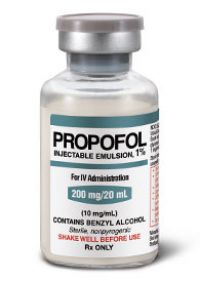 |
The death of Michael Jackson has made the drug propofol a well-known name. It's a widely used sedative in hospitals... But days before his death, the American Association of Nurse Anesthetists warned hospitals to restrict access to propofol, because doctors and nurses who use it on patients are also abusing it...
But even providers who use it on a daily basis are unclear how potent it can be. A recent study found 30 percent of physicians who abused propofol actually died. And last year, Dr. Brent Cambron was found dead in a storage closet at Beth Israel Deaconess Medical Center. There was a half-filled vial of propofol and other drugs surrounding his body. The anesthesiologist had been battling drug addiction.
Anesthesiologists are extremely high risk for drug abuse. They have unlimited access to drugs, and they alone control the quantities put into the patient's syringe and the amount left-over in the bottle after the end of the surgery. They are also the least likely professionals to get caught and prosecuted for their crimes. Usually if they get caught they are reprimanded or fired. They are not sent to jail. How can you tell an anesthesiologist is abusing? They always wear long sleeve shirts, even under their scrubs. This is such a stereotype that longvsleeves under the scrubs is a de-facto uniform for identifying anesthesiologists.
As if this trend wasn't scary enough, I offer a humorous anecdote that is something of a hospital urban legend. Apparently there was this anesthesiologist who meant to shoot up with fentanyl before a surgery, but in his haste mixed up his bottles and accidentally shot himself with succinylcholine, a paralytic used to relax throat muscles in patients when they are intubated. The rest of the OR staff heard a thud and rushed in to to see what the problem was. The anesthesiologist was lying on the floor, totally rigid and paralyzed but fully awake. Oops.
 |
This FDA smackdown is a long time in coming.
The US government has imposed a $2.3 billion fine on Pfizer for a string of offenses including illegal off-label prescribing and bribery of officials.
The fine represents the country's biggest ever fraud settlement against a pharmaceutical company, and covers criminal and civil charges.
The US Department of Justice announced the deal which would resolve criminal and civil liability linked to Pfizer's illegal off-label marketing of its painkiller Bextra for several uses and doses that the FDA had specifically declined to approve due to safety concerns.
Launched in 2002, Bextra was withdrawn just three years later in April 2005, after the FDA concluded its risks outweighed its benefits.
Pfizer pleaded guilty to the charges, and will pay a fine of $1.195 billion, the largest criminal fine ever imposed in the US for any matter. The company's subsidiary Pharmacia & Upjohn will also forfeit $105 million, for a total criminal resolution of $1.3 billion.
Pfizer has also agreed to pay $1 billion to resolve allegations under the civil False Claims Act that the company illegally promoted four drugs - Bextra; Geodon, an anti-psychotic drug; antibiotic Zyvox, an antibiotic and epilepsy treatment Lyrica.
The deal also settles allegations that Pfizer caused false claims to be submitted to government health care programmes for unlicensed indications, and which were therefore not covered by those insurance schemes.
The civil settlement also resolves allegations that Pfizer paid bribes to health care professionals to induce them to prescribe these and other drugs. The civil settlement will be divided between the federal government, to receive over $668.5 million, and the state Medicaid system, which receives $331.4 million.
Pfizer also has agreed to take part in a large scale 'corporate integrity agreement' with the Office of Inspector General of the Department of Health and Human Services. This means procedures and reviews will be put in place to avoid and promptly detect similar transgressions taking place.
The US authorities were alerted to the wrongdoing by whistleblowers. As part of the deal, six whistleblowers will receive payments worth more than $102 million, taken from the government's share of the settlement.
Word.
|

Recently @ DoseNation
|
|