 |
In 1994 Microsoft corporation designers Mark Malamud and Erik Gavriluk approached Brian Eno to compose music for the Windows 95 project. The result was the six-second start-up music-sound of the Windows 95 operating system, The Microsoft Sound (Listen on YouTube). In the San Francisco Chronicle he said, "The idea came up at the time when I was completely bereft of ideas. I'd been working on my own music for a while and was quite lost, actually. And I really appreciated someone coming along and saying, "Here's a specific problem -- solve it."
The thing from the agency said, "We want a piece of music that is inspiring, universal, blah- blah, da-da-da, optimistic, futuristic, sentimental, emotional," this whole list of adjectives, and then at the bottom it said "and it must be 31/4 seconds long."
I thought this was so funny and an amazing thought to actually try to make a little piece of music. It's like making a tiny little jewel.
In fact, I made 84 pieces. I got completely into this world of tiny, tiny little pieces of music. I was so sensitive to microseconds at the end of this that it really broke a logjam in my own work. Then when I'd finished that and I went back to working with pieces that were like three minutes long, it seemed like oceans of time."
Eno Quotes: - Aggressive music can only shock you once. Afterwards its impact declines. It's inevitable.
- As soon as I hear a sound, it always suggests a mood to me.
- At the beginning of the 20th century, the ambition of the great painters was to make paintings that were like music, which was then considered as the noblest art.
- Avant-garde music is sort of research music. You're glad someone's done it but you don't necessarily want to listen to it.
- Every collaboration helps you grow. With Bowie, it's different every time. I know how to create settings, unusual aural environments. That inspires him. He's very quick.
- For me it's always contingent on getting a sound-the sound always suggests what kind of melody it should be. So it's always sound first and then the line afterwards.
- For the world to be interesting, you have to be manipulating it all the time.
Video: Just Another Day:
Dennis Hopper, the high-flying Hollywood wild man whose memorable and erratic career included an early turn in "Rebel Without a Cause," an improbable smash with "Easy Rider" and a classic character role in "Blue Velvet," has died. He was 74.
Hopper died Saturday at his home in the Los Angeles beach community of Venice, surrounded by family and friends, family friend Alex Hitz said. Hopper's manager announced in October 2009 that he had been diagnosed with prostate cancer.
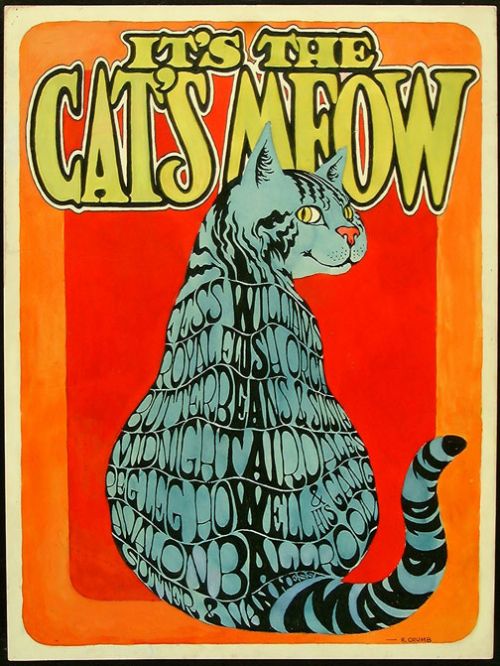
A landmark case that pushed through laws banning the drug mephedrone - popularly known as 'Miaow Miaow' - has come under strong criticism. A toxicology report of the two teenagers thought to have died from the drug showed neither had actually taken it.
"Legal high kills two teens," cried the Daily Express earlier this year. There followed a steady stream of stories in the UK media of the dangers of the then little known "legal high".
The government subsequently rushed through an emergency ban on the drug and related compounds that became law in early April. Although implicated in 27 deaths, a report by the International Centre for Drug Policy at University College London found it to be a contributing factor in just one.
 |
Originally published in 2008 "The Holy Mushroom: Evidence of Mushrooms in Judeo-Christianity" by Jan R. Irvin, with Jack Herer, is a fine addition to a very much under-researched area; the entheogenic relationship with religion. It critically re-evaluates the schism between the theory's two greatest proponents -- R. Gordon Wasson and John M. Allegro -- and introduces new pictorial and textual evidence to add weight to the contemporary arguments.
The study of entheobotany developed off the back of ethnobotany, which is to say the relationship between humans and plants developed into the more precise consideration of the theoretical existence of a connection between hallucinogenic agents and religious/spiritual practice in human history.
There's a fair amount of controversy surrounding the topic and this is reflected in the fact that, for the most part, mainstream researchers have failed to give it a detailed deconstruction; leaving it beyond even the periphery of academic circles. However, one deconstruction that has been performed was by Dr. Andy Letcher in his book "Shroom". He concluded that, according to the available evidence, the religious use of magic mushrooms in the Western world is a modern phenomena. According to Irvin, however, "The Holy Mushroom" disproves his conclusion.
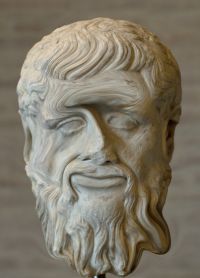 |
Michael A. Rinella is the author of the forthcoming book "Pharmakon: Plato, Drug Culture, and Identity in Ancient Athens", which examines state control of ecstasy in ancient Greece.
Dr. Rinella, what significance, what weight did the Greeks of the Classical Period attach to intoxication?
Let us consider the question of significance or awareness first. It surprises me that there are many analysts who believe that intoxication was not a condition subjected to a constant, regular, and on-going ethical inquiry in ancient Greece, simply because ancient thought lacked, to give one example, something like our contemporary theory of addiction. In other words they argue that the ancient Greeks had no "drug problem" and were in a sense oblivious about drugs. Well of course that is true if by "drug problem" you are thinking of the specific set of responses to recreational drug use in play since roughly the beginning of the Industrial Revolution. But if you consider Greek thought on intoxication in its own terms you'll find a discourse as rich and complex as the ancient discussion of food and sex.
And the emphasis?
The question of weight or emphasis is equally important. In contemporary market economies non-productive drug use has been problematized as a disease condition to be subjected to a juridical intervention by a criminal justice system, a medico-therapeutic intervention by a drug-abuse system, or both because these systems tend to operate in loose conjunction or alliance with one another (each having a normalizing role within late-capitalist society). In ancient Greece intoxication was problematized largely on aesthetic grounds. At least until Plato, who was considerably more sophisticated than his peers in terms of understanding human psychology.
[Thanks Joerg!]
A FORMER Supreme Court justice has called for illicit drugs to be legalised.
Retired ACT judge Kenneth Crispin says the banning of party drugs has been an even bigger failure than the US prohibition on alcohol during the 1920s and early '30s.
The three-decade war on drugs had produced gangsters like Al Capone on a much greater scale, he argued.
"Drug usage has exploded during the period of the war on drugs," he told ABC Television.
"All around the world, the most vigorously enforced drug laws tend to have the highest rates of usage."
Street prices of drugs had also fallen during the crackdown on drugs, with cocaine costing a sixth of what it did compared with the start of the drug war.
Mr Crispin said he came to his conclusion on the need to decriminalise drugs "incredibly reluctantly".

The mice shown here both had a mutant gene named Hoxb8 that originated in bone marrow and caused the mice to groom themselves pathologically, pulling out their hair. The mouse on the left displays hair loss on its chest and flank. After receiving a bone marrow transplant from a normal mouse three months earlier, the mouse at right fully recovered from the pathological grooming mutation and regrew its lost hair. University of Utah geneticist and Nobel Laureate Mario Capecchi says the study is the first to show and direct cause-and-effect link between an immune system defect and a psychiatric disorder. (Credit: Shau-Kwaun Chen, University of Utah)
This is one of those periodic discoveries that totally changes the way we think about behavior and mental illness. Wow.
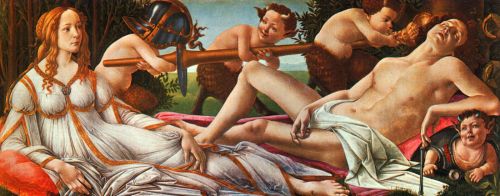
Boticelli's Venus and Mars has long been regarded as a tribute to the "conquering and civilising power of love" but new evidence suggests it could contain a subversive message about drug use.
A plant being held by a mischievous-looking satyr in the bottom right corner of the painting has been recognised as a specimen of Datura stramonium, a plant which causes madness and the urge to take one's clothes off.
The fruit, the effects of which are documented in Ancient Greek texts, had not been thought important until it was noticed by David Bellingham, a programme director at Sotheby's Institute of Art.
He showed the painting to horticulturalists at Kew Gardens who identified the plant, which is also called thorn apple and Devil's trumpet.
Okay, I took a close look at the painting. No trumpet flowers, no spiky seed pods. How are we to know it is supposed to be Datura? Here is a close-up of the little guy, it doesn't look like he is holding anything resembling Datura. What?
Yes, you read that correctly. Follow the link if you want the details. This is truly too bizarre for commentary.
 |
Originally published in 1961 by Hardcourt, Brace & World 'Exploring Inner Space: Personal experiences under LSD-25' by Jane Dunlap is one of the earliest examples of both entheogenic literature and of a woman writing on the psychedelic experience. This beautifully crafted text explores her experiences over the course of 5 LSD sessions under Dr. Oscar Janiger's research project on hallucinogens and creativity. Her notes from these sessions make up the content of the book.
'Jane Dunlap' is a pen name for the author Adelle Davis (1904-1974). During the mid-twentieth century Smith was one of the earliest proponents of the field of nutrition, who between 1947-1964 wrote numerous, widely read, books on the topic . 'Exploring Inner Space' is somewhat of an oddity in her bibliography, not least because it makes use of a pen name unlike her other works but also because it tackles such a different subject matter; for it is not physical but spiritual well-being that she explores. Immediately this begs the question; why did she use a pen name as opposed to her own?
|

Recently @ DoseNation
|
|