Originally published in 2010 'Birth of a Psychedelic Culture: Conversations about Leary, the Harvard experiment, Millbrook and the Sixties' is a fascinating insight into the early years of the Western social phenomena, now known as psychedelia. Its multifaceted approach produces a wonderfully rounded examination of life within the burgeoning psychedelic bubble and the evolving atmosphere therein.
The book is largely constructed through a transcribed conversation between Ram Dass (formerly Dr. Richard Alpert) and Dr. Ralph Metzner -- both core members, alongside Timothy Leary, in the Harvard Psilocybin project-- and is mediated by Gary Bravo. They recollect, discursively, the history and the discourse that shaped not only their lives, but, in part, the lives of millions of other people as well. Each section of the book is annotated by key events...
 |
Today's relatively unsurprising bit of media hypocrisy:
Representatives from the CBS Corporation and Neutron Media Screen Marketing have rejected a paid advertisement from the NORML Foundation, the educational arm of the National Organization for the Reform of Marijuana Laws (NORML), that was intended to appear on the CBS Super Screen billboard in New York City’s Times Square....
Commenting on CBS’ last minute rejection of the ad, NORML Foundation Executive Allen St. Pierre said, “Major media corporations like CBS have no problem airing programming that allows them to profit off the public’s interest in marijuana and marijuana law reform, such as Showtime’s hit series Weeds and the CBSnews.com online series ‘Marijuana Nation.’ Yet these same corporate entities balk at airing media that calls on reforming America’s criminal marijuana policies – policies that have led directly to the arrest of over 20 million Americans since 1965. How can advocates be expected to change these failed policies when those that control America’s airwaves refuse to allow them a public forum to voice their point of view?”
Here is the offending ad:
[Thanks, 23 Wolves!]
Augmented (hyper)Reality: Domestic Robocop from Keiichi Matsuda
The latter half of the 20th century saw the built environment merged with media space, and architecture taking on new roles related to branding, image and consumerism. Augmented reality may recontextualise the functions of consumerism and architecture, and change in the way in which we operate within it.
Worth listening to on earphones.
Immigrants from an obscure corner of Mexico are changing heroin use in many parts of America.
Farm boys from a tiny county that once depended on sugar cane have perfected an ingenious business model for selling a semi-processed form of Mexican heroin known as black tar.
Using convenient delivery by car and aggressive marketing, they have moved into cities and small towns across the United States, often creating demand for heroin where there was little or none. In many of those places, authorities report increases in overdoses and deaths.
Immigrants from Xalisco in the Pacific Coast state of Nayarit, Mexico, they have brought an audacious entrepreneurial spirit to the heroin trade. Their success stems from both their product, which is cheaper and more potent than Colombian heroin, and their business model, which places a premium on customer convenience and satisfaction
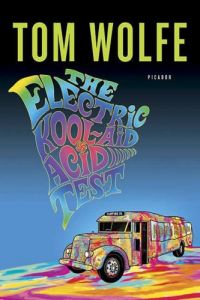 |
Originally published in 1968 'The Electric Kool-Aid Acid Test' by Tom Wolfe is both a remarkable work of journalism and a historical-literary classic. It follows the exploits of Ken Kesey and the Merry Pranksters as they trip their way round the US in the 1960s, turning on the masses and experimenting in group consciousness; all under the influence of LSD and a multimedia of sensual bombardment.
As a work of psychedelic literature it is a brilliant exploration into the social effects of LSD, at a time when the psy-movement itself was producing very little in the way of literature. As Wolfe notes in his introduction to the New Journalism anthology: "I wrote The Electric Kool-Aid Acid Test and then waited for the novels that I was sure would come pouring out of the psychedelic experience… but they never came forth… I learned later that publishers had been waiting too."
Unlike Hunter S. Thompson, who posited himself as the framework for his texts, Tom Wolfe, although present in places, tends less toward his own psychology and more to the mise-en-scene of events and to the minds of those people with whom he travels and interviews. The upshot of this is a very literary undertaking that focuses a lot on atmosphere and feeling; rather than only objective fact recording...
The Future Beckons, It Ain't So Bad....
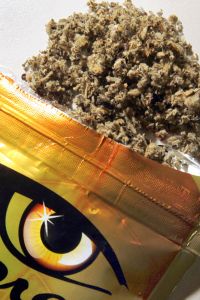 |
Abel Pharmboy has a post over at Terra Sigillata about JWH-018, the synthetic cannabinoid that is the active ingredient in Spice and K2. Much of what he has to say has graced the electrons of DoseNation before. But he does point to an interesting paper finding that the synthetic stuff binds more strongly to CB1 receptors (which are implicated in psychotropic effects) than CB2 (which are more involved with pain and inflammation), whereas THC binds equally to both. Abel points out that the implications of this are not clear for psychonauts:
So while JWH-018 has four-fold greater potency for CB1 receptors than THC in an isolated receptor binding study, how its effect compares to plain-old marijuana depends on other factors such as the relative amount in the product, how stable it is to combustion, how it's metabolized in the body, among others.
He goes on to briefly criticize the hysteria of lawmakers' reactions to their burgeoning awareness of this chemical. The comments have an interesting discussion of various Huffman compounds as possible carcinogens that those with a particular interest in the chemistry of synthetic cannabinoids will likely want to check out.
I'm sure the majority of you have seen this by now, but I DO NOT CARE. It is time to spread the word: SOMEONE MAKE THE AXE COP MOVIE A REALITY.
[Written by a 5 year old. Drawn by a 29 year old. What else do you need?]

Salon is running a nice article, reprinted from Der Spiegel, reminding us of the cheerful fact that yes, people are still getting chopped into bits on a pretty regular basis thanks to the war on drugs.
Mexico's drug war is becoming more and more brutal. President Felipe Calderón has deployed 45,000 soldiers and federal police in the government's fight against the drug mafia, and 5,000 of them patrol the streets of Ciudad Juarez alone.
Despite the government's stepped-up efforts, the death toll continues to rise. Before Calderón came into office in December 2006, an average of two people a day died a violent death in the border city. By 2008, the daily death toll had risen to five, and last year the murder rate in Ciudad Juarez was up to seven people a day. Since 2007, more than 15,000 people have died in Mexico's drug wars.
Meanwhile, the drug business is booming. In 2009, Mexico became the world's second-largest marijuana producer, with poor, small farmers switching from corn and beans to cannabis. Frustrated government officials are convinced that they have already lost the drug war.
What could we possibly do? Decriminalize?
This form of liberalization is already being pursued across the Atlantic in the Czech Republic, the Netherlands and Portugal, where drug use has not increased as a result of the lax laws. In the large Latin American countries, on the other hand, the number of addicts is growing.
In other words, "that's crazy talk!"
|

Recently @ DoseNation
|
|